
 See My Latest Article on HelloNation
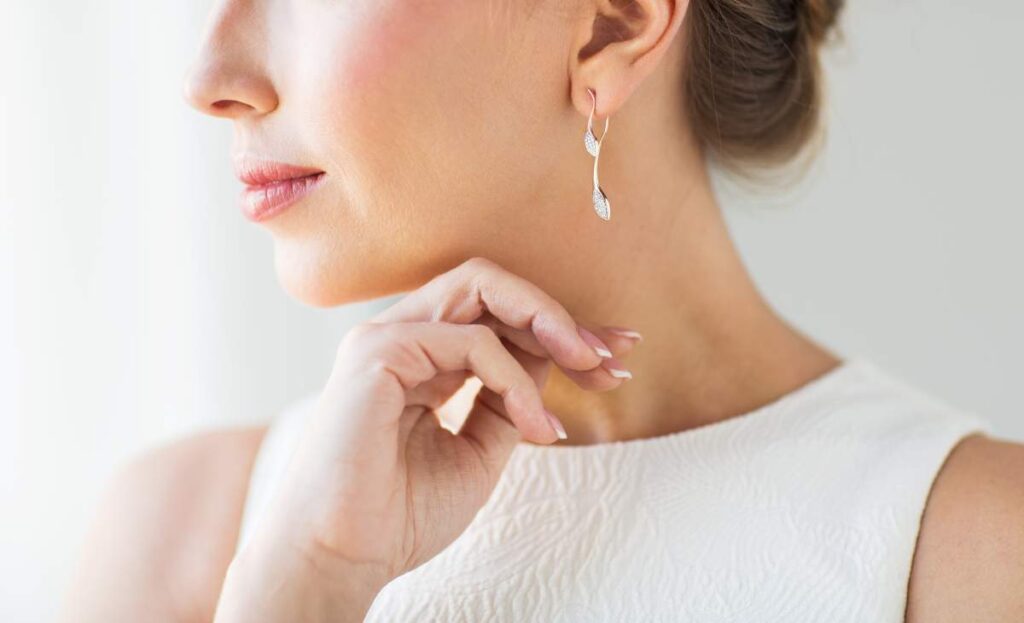
Choosing earrings that suit your face shape is less about strict fashion rules and more about creating visual balance. The most flattering pair usually adds contrast to the natural lines of the face, while also fitting the wearer’s lifestyle, hairstyle, comfort preferences, and wardrobe.
For residents of Millsboro, DE, earrings may need to work across everyday errands, warm-weather outdoor activities, professional settings, and seasonal gatherings. The right shape should look appealing in a mirror but also remain comfortable and secure during normal movement.
How can you identify your face shape?
The easiest method is to look at the overall outline of the face rather than focusing on individual features. Pull the hair away from the face and compare the width of the forehead, cheekbones, and jawline with the length of the face.
Common face shapes include:
- Oval: The face is longer than it is wide, with a gently rounded jaw and forehead.
- Round: The width and length are similar, with softer cheeks and a curved jawline.
- Square: The forehead, cheekbones, and jaw are similar in width, often with a defined jaw.
- Heart-shaped: The forehead is wider, while the chin narrows toward a smaller point.
- Long or oblong: The face is noticeably longer than it is wide, with relatively straight sides.
- Diamond: The cheekbones are the widest area, with a narrower forehead and jaw.
Many people have a combination of these characteristics. Face-shape guidance is a starting point, not a requirement.
Which earrings flatter an oval face?
Oval faces are naturally balanced, so most earring styles can work well. Medium-sized hoops, studs, drops, chandeliers, and geometric designs can all complement this shape.
The most useful consideration is proportion. Very small earrings may appear understated, while very large earrings can become the dominant feature. A balanced pair should suit the wearer’s scale and hairstyle.
Oval faces can also carry unusual shapes effectively, including asymmetric earrings, angular drops, and sculptural designs. If the face already has soft contours, earrings with straight edges or clean geometric lines can add definition.
What earrings work well for a round face?
Longer earrings often complement a round face by adding visual length. Slim drops, vertical bars, teardrops, and narrow dangles can help create a more elongated appearance.
Angular designs may also provide contrast. Rectangular, linear, or slightly pointed shapes can make the overall look feel more structured.
Round faces do not need to avoid circular jewelry entirely. Small hoops or rounded studs can be attractive, especially when they are proportionate. The main consideration is avoiding a pair that closely repeats the width and roundness of the cheeks if the goal is to create more contrast.
Large, wide hoops may emphasize horizontal width. That is not necessarily unflattering, but it creates a softer, more rounded effect rather than a lengthening one.
Which earrings suit a square face?
Square faces often look balanced with earrings that soften or contrast with a defined jawline. Rounded hoops, oval drops, teardrops, and curved designs can create a pleasing counterpoint to straighter facial lines.
Longer earrings may also work well, particularly when they include movement or a tapered shape. A drop that narrows toward the bottom can draw the eye vertically without making the face appear overly angular.
Very sharp, boxy earrings can echo the structure of a square face. Some people enjoy that coordinated effect, while others prefer more contrast. Rounded designs are usually the simpler choice for a softer appearance.
How should earrings be chosen for a heart-shaped face?
Heart-shaped faces are wider near the forehead and narrower at the chin. Earrings that add visual weight near the lower part of the face can help create balance.
Teardrops, triangular designs with the wider portion at the bottom, chandelier earrings, and rounded drops are often effective. These styles broaden the area near the jaw while drawing attention downward.
Small studs can also be attractive, especially for casual wear. If the goal is to balance the proportions of the face, however, a drop or dangle that extends below the earlobe usually creates more visual harmony than a very small design placed only near the upper face.
What earrings complement a long or oblong face?
For a long face, earrings with width can help balance vertical length. Medium hoops, rounded drops, clustered designs, and shorter statement earrings may be especially suitable.
Very long, narrow earrings can make the face appear longer. That does not make them unsuitable, but the effect should be considered when choosing jewelry for a particular outfit or hairstyle.
Width does not have to mean oversized jewelry. A modest oval drop or a rounded cluster may provide enough horizontal presence without feeling heavy. Earrings that sit close to the jawline can also add visual fullness.
Which earrings work with a diamond-shaped face?
Diamond-shaped faces are widest at the cheekbones and narrower at the forehead and jaw. Earrings with soft curves or moderate width near the bottom can help balance those proportions.
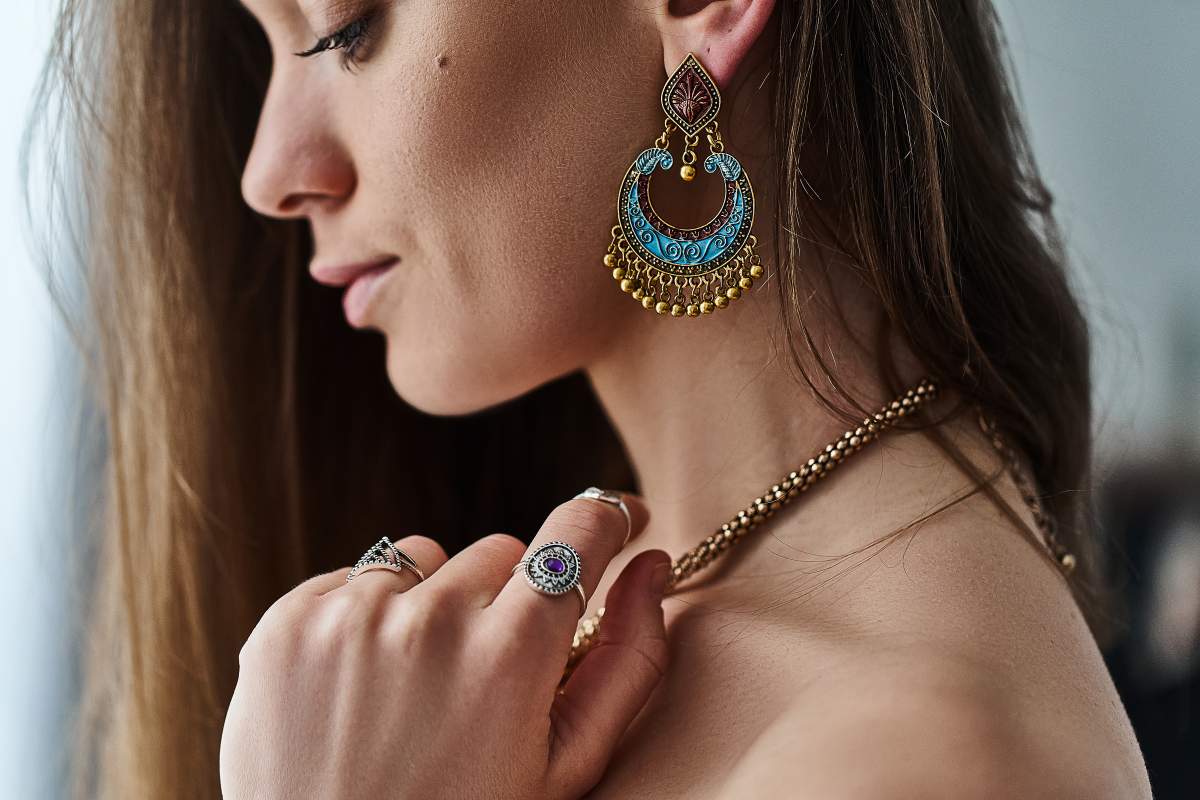
Oval drops, teardrops, curved hoops, and chandelier styles are common choices. Designs that are wider at the bottom can add fullness near the jaw, while rounded edges soften the stronger width across the cheekbones.
Very wide earrings that end directly beside the cheekbones may emphasize the widest part of the face. Moving the visual weight slightly lower often creates a more balanced appearance.
How do hair, glasses, and necklines change the choice?
Face shape is only one part of the decision. Hair, eyewear, and clothing can change how earrings appear.
Short hair or pulled-back hair places more attention on the earrings. A larger design may be noticeable in this setting, while a simple stud can look polished without competing with the face.
Long hair can partially cover earrings. Smooth drops, hoops, and designs with movement may remain visible, while tiny details may disappear beneath the hair.
Glasses introduce another frame around the face. If the frames are bold or angular, earrings with simpler shapes may prevent the overall look from feeling crowded. With minimal frames, more decorative earrings may be easier to wear.
Necklines also matter. Long earrings can complement an open neckline, while shorter earrings may work better with high collars, scarves, or layered clothing.
What practical details matter in daily wear?
Comfort and security should be considered alongside appearance. Earrings that look attractive but pull on the earlobe or catch on clothing may not be suitable for regular use.
Useful checks include:
- Test whether the earring feels balanced after several minutes of wear.
- Choose secure backs for active days or crowded environments.
- Consider lightweight materials for larger drops or hoops.
- Check whether the design catches in long hair, sweaters, or scarves.
- Avoid wearing jewelry that causes redness, itching, swelling, or persistent discomfort.
- For warm, humid weather, clean earrings regularly and allow skin to stay dry.
In the coastal plain climate around Millsboro, outdoor activities and summer heat can increase perspiration. Removing earrings before swimming, showering, or applying hair and skin products can help protect both the jewelry and the skin.
Is matching earrings to face shape a strict rule?
No. Face-shape advice describes visual effects, not fixed rules about what someone may wear. Personal style, comfort, cultural preferences, hairstyle, and the occasion are equally relevant.
A useful approach is to ask what the earrings are doing visually. Are they adding length, softening angles, broadening the jaw area, or repeating a feature already present? Once that effect is understood, choosing becomes more intentional.
The most reliable test is simple: wear the earrings with the intended hairstyle and clothing, then check the full balance in natural light. A pair that feels comfortable, remains secure, and makes the wearer feel confident is usually the right choice, regardless of face-shape categories.